 Swimming Lesson in KL, Malaysia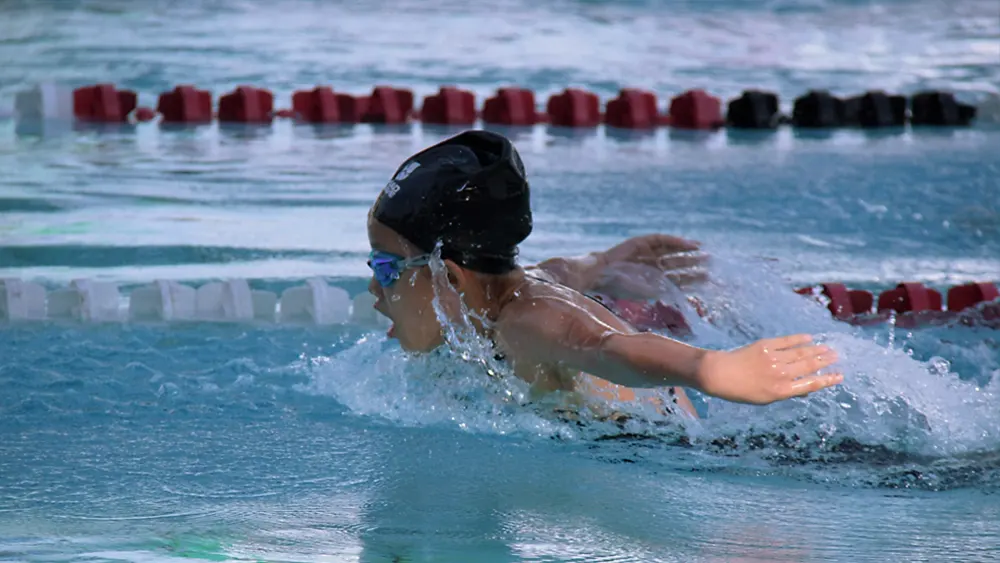
For many parents, especially those who approach their child’s development with intention and high expectations, swimming is more than just an extracurricular activity. It is a life skill — one that should be taught with the same structure, clarity, and measurable outcomes as any formal education program.
At D Swim Academy, progress in swimming is not left to chance. It is defined, structured, and carefully guided through a proven pathway. Understanding what real progress looks like will help you set the right expectations — and recognise meaningful growth when it happens.
Progress is not about speed — it’s about mastery.
One of the most common misconceptions parents have is expecting quick results: “After a few lessons, shouldn’t my child already be swimming independently?”
In reality, progress in swimming — like learning to read or play an instrument — is cumulative. At DSA, progression is based on mastery, not time spent. Children move forward only when they are ready, ensuring that each skill is properly developed before advancing.
This approach prevents gaps in learning and builds a strong technical and psychological foundation. It also means that two children starting at the same time may progress at different speeds — and that’s not just acceptable, it’s expected.
A structured pathway: The foundation of real progress
True progress requires structure. At DSA, the Learn to Swim program follows a clearly defined pathway with four colour-coded levels: Red, Pink, Yellow, and Blue, each divided into two sub-levels.
This structure creates a visible roadmap for both parents and children. Instead of wondering, “Is my child improving?”, you can clearly identify:
Which level your child is in, what skills they are currently learning and what milestones they need to achieve next.
This transforms swimming lessons from a vague activity into a measurable learning journey.
What progress looks like at each stage
To truly understand progress, it’s helpful to see how skills evolve across the pathway.
1. Early progress: Confidence and water familiarisation (Red Levels)
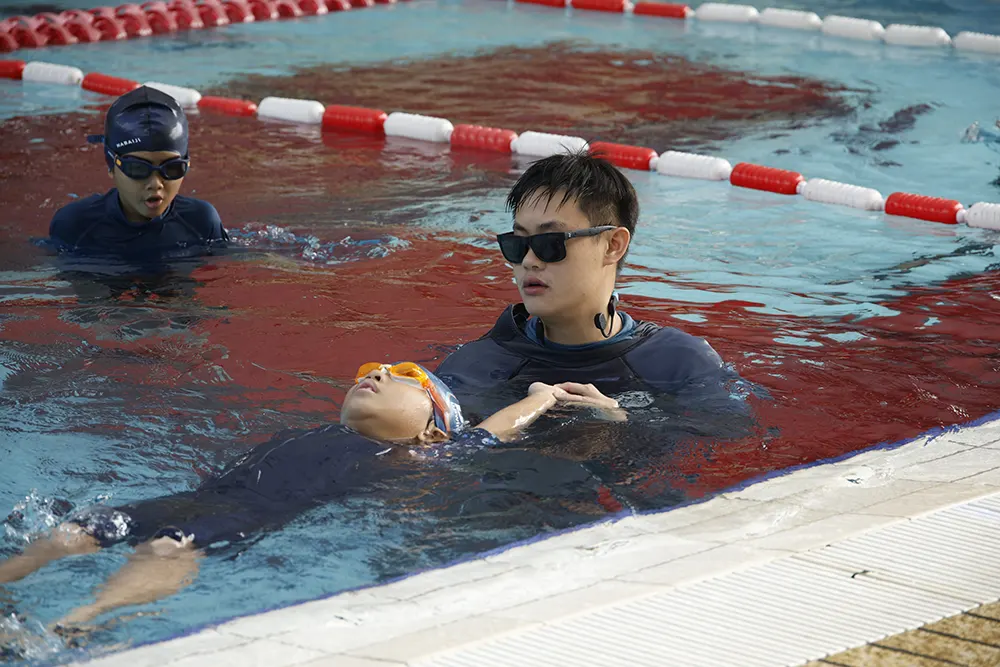
At the beginning, progress may appear subtle — but it is critical. Children learn to feel comfortable in the water, develop buoyancy and balance and perform basic movements safely. The focus here is confidence and safety, not distance or speed. This stage lays the groundwork for everything that follows.
For parents, the progress seen is:
- Your child entering the water willingly
- Improved comfort and reduced fear
- Ability to float or move with support
2. Building skills: Movement and coordination (Pink Levels)
As children move into the Pink levels, they begin to learn basic freestyle movements, coordinate arms and legs and develop glide and kick techniques. Here, progress becomes more visible. Movements are more controlled, and children begin to show early stroke patterns.
For parents, the progress seen is:
- Better body control in water
- Coordinated kicking and arm movements
- Increased independence
3. Developing technique: Breathing and stroke efficiency (Yellow Levels)
At this stage, swimming becomes more technical and children learn breathing techniques, improve freestyle and backstroke and begin breaststroke fundamentals. This is where swimming starts to look like “real swimming.” But importantly, it is still being refined through structured drills and repetition.
For parents, the progress seen is:
- Controlled breathing while swimming
- Longer distances with consistency
- Improved stroke coordination
4. Advanced progress: Endurance and multiple strokes (Blue Levels)
At the Blue levels, children develop advanced stroke techniques, swim longer distances confidently and learn multiple strokes including butterfly. At this point, your child is no longer just learning to swim — they are becoming a competent, confident swimmer.
For parents, the progress seen is:
- Strong, confident swimming across strokes
- Ability to handle deeper water
- Readiness for squad or advanced programmes
Progress is also about confidence and behaviour
One of the most overlooked indicators of progress in swimming is not purely technical — it is emotional and behavioural. While parents often look for visible signs like stronger strokes or longer distances, real progress frequently begins much earlier, in how a child feels and responds in the water. At D Swim Academy, equal importance is placed on building confidence alongside skill, recognising that a child who feels safe and secure will naturally learn more effectively.
In the early stages, progress may simply look like a child becoming more comfortable — entering the pool without hesitation, putting their face in the water, or trusting the teacher enough to try something new. These small shifts are significant. They indicate that fear is being replaced with familiarity, and resistance with willingness. Without this foundation, technical development can be inconsistent or forced.
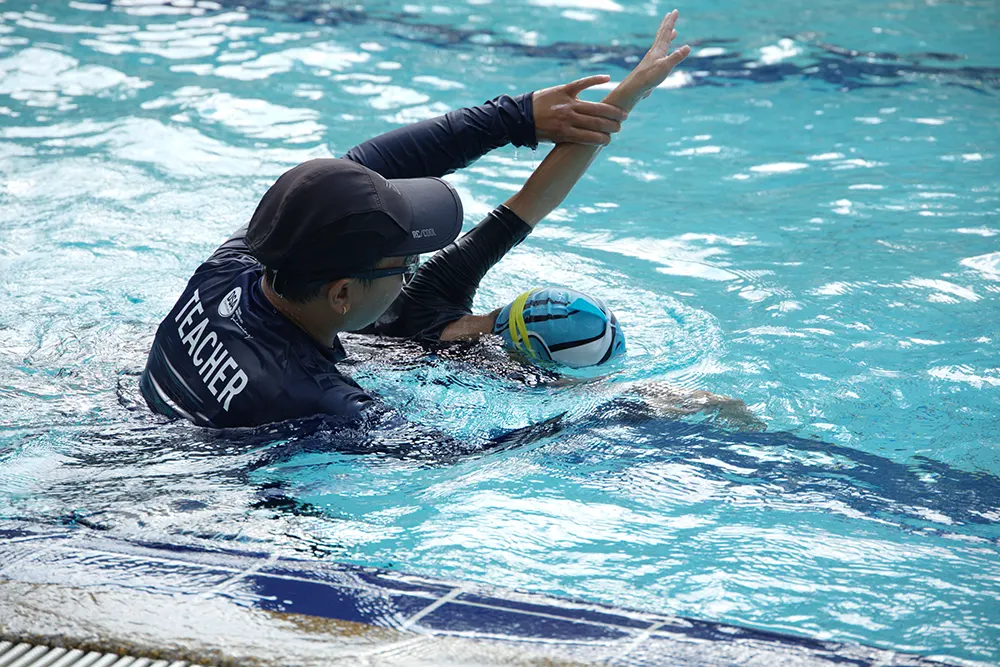
As lessons continue, behavioural changes become more noticeable. Children begin to show independence, follow instructions more confidently, and demonstrate a readiness to attempt more complex movements. They are no longer reacting to the water but actively engaging with it. This transition is a critical part of the learning process, and it reflects the effectiveness of a structured, child-centred teaching approach.
The long-term view: beyond learn to swim
Another important aspect of progress is recognising where it leads. At DSA, once children complete the Learn to Swim pathway, they can progress into advanced options such as Swim Squad, artistic swimming, or water polo.
This means your investment is not just about learning a basic skill — it’s about opening pathways to competitive swimming, lifelong fitness and water confidence in all environments. Progress in swimming is not defined by how quickly a child can swim across a pool. It is defined by how well they learn, how confidently they move, and how safely they behave in water.
At D Swim Academy Sdn Bhd, progress is structured, visible, and purposeful. From Red to Blue, from first splash to confident swimmer, every stage is designed to build on the last — ensuring that your child doesn’t just learn to swim, but learns to swim well.
For parents who value quality education and measurable outcomes, this clarity is essential. Because when you understand what progress really looks like, you can trust the process — and see the results.
NB: Children should always be accompanied by their parents or appointed guardians when in or around the pool or any water bodies. DSA provides Learn to Swim Programs for Children for all ages. Classes are available at multiple locations across Kuala Lumpur, Selangor and Shah Alam areas in the Klang Valley, Bandar Dato’ Onn, Johor and Seberang Jaya, Penang.